Blog
Dental hygiene tips for healthy teeth & gums
Different Types of Dental Crowns Explained
When you hear that you need a crown, the first questions are usually practical. How many visits? Will it be uncomfortable? Will it look natural? That’s normal. Most of us focus on getting through the procedure.
What doesn’t always get discussed right away is that there are several types of dental crowns, and the material you choose can influence how that tooth holds up over time. A crown isn’t just something placed on top for appearance. It becomes part of your bite. It handles pressure when you chew. It blends into your smile, ideally without drawing attention.
The choice usually comes down to the situation. A front tooth isn’t treated the same way as a back molar. Heavy bite pressure or nighttime grinding can change what makes sense. Those factors aren’t always obvious, but they do count.
Why There Isn’t Just One Standard Crown
It would be easier if dentistry offered one universal solution. But teeth do very different jobs inside the same mouth.
Front teeth are always on display, while the back ones do most of the chewing. Because of that, dentists don’t rely on just one material. They look at different types of dental crown materials depending on where the tooth is and what it needs to handle.
Dental materials today aren’t what they used to be. Over the years, ceramics and bonding methods have improved a lot. The American Dental Association has acknowledged these improvements in both strength and appearance. In simple terms, you have options because technology improved.
Porcelain Crowns: Designed for Appearance
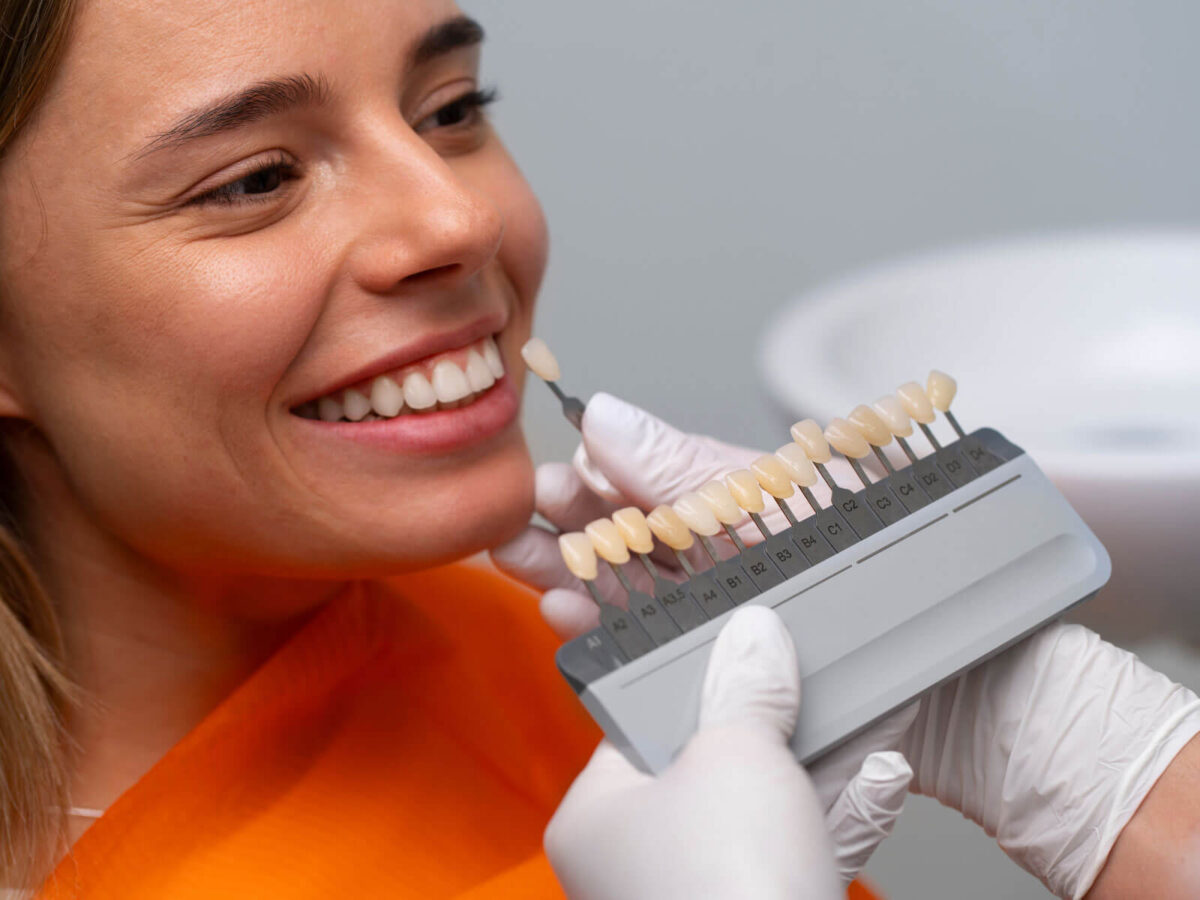
If the tooth is in the front, porcelain usually comes up pretty quickly. It’s one of the more common choices in that area. Among the types of dental crowns, porcelain is commonly picked for front teeth because it tends to resemble natural enamel more closely. It can be blended to match the teeth around it. For people who are particular about how their smile looks, that matters. Especially in the front.
That said, porcelain isn’t automatically right for every situation. If someone has a very strong bite or grinds at night, dentists may pause and consider whether another material would hold up better. It’s not about porcelain being weak. It’s about where it’s being used.
Porcelain Fused to Metal: Built for Strength
In these crowns, metal sits underneath while porcelain covers the surface. The metal keeps it solid. The porcelain helps it match the surrounding teeth. It was a straightforward way to combine function and appearance.
Dentists still rely on them in situations where the tooth needs to handle a lot of pressure. Occasionally, though, a thin dark edge can appear near the gums if the metal becomes visible. They function well. In terms of appearance, some of the newer materials blend in more naturally. But that doesn’t mean this option is outdated. It still has its place.
Zirconia Crowns: Strength and Looks
Zirconia has become more common in recent years. When people look into types of dental crowns, it often comes up because it’s strong and still looks fairly natural compared to older metal-based options. While it’s a type of ceramic, it’s built to handle more pressure than traditional porcelain.
It’s strong enough to handle the force that molars deal with every day. At the same time, newer versions of zirconia are more translucent than early models, so they don’t appear as opaque.
Data referenced by the National Institutes of Health points to strong durability for zirconia crowns over time, especially on molars.
That doesn’t mean it’s right for everyone, but it’s frequently part of the discussion since it combines strength with a reasonable appearance.
All-Metal Crowns: Built for Durability
All-metal crowns, often made from gold alloys or other metal blends, don’t try to look like natural teeth. But they last. Among the types of dental crowns, metal crowns are extremely resistant to wear and fracture. They require less removal of natural tooth structure and rarely chip.
They are typically placed on back molars where appearance isn’t a concern. When strength is the main concern, especially with grinding, metal crowns can be practical. They aren’t as subtle visually, yet they handle stress well.
All-Ceramic Crowns: Front Tooth Use
Some patients prefer a metal-free option. In that case, all-ceramic crowns come into play. They’re made to match the rest of the teeth, which tends to matter most in visible areas.
Ceramics today are stronger than they were years ago, but placement still matters. A back molar under heavy pressure may be evaluated differently from a front tooth. For patients who care most about how their smile looks, this material is often the preferred direction.
Resin Crowns: Usually Temporary
Resin is sometimes used, though not usually as a long-term solution. It’s more affordable and often placed as a temporary cover while the final crown is being prepared. In that sense, it serves a practical role.
Among the types of dental crowns, resin doesn’t hold up quite as well over time. It can show wear sooner, especially on back teeth that handle most of the chewing. That’s why dentists tend to use it temporarily instead of permanently.
How Long They Tend to Last
One of the first things people want to know is how long a crown will last. There isn’t a fixed number, but many last somewhere between 10 and 15 years. Some go beyond that. The outcome usually depends on the material chosen and daily oral care.
Findings available from the National Institutes of Health show that many crowns continue functioning reliably for over a decade with regular maintenance. That said, no restoration is permanent. Over time, wear happens. But with the right fit and consistent care, a crown can remain functional for quite a while.
Choosing Between the Types of Dental Crowns
When reviewing types of dental crowns, the choice isn’t purely technical. People approach it from different angles. Some care about how invisible it looks. Others want reassurance that it’ll hold up for years. Financial considerations come into play too.
Your dentist doesn’t pick a material randomly. Where the tooth sits and how much pressure it handles usually come up. So is the overall condition around it.
FAQs
What are my options?
There’s more than one. The material is chosen based on the situation.
Which is strongest?
The ones used on back teeth tend to be built for more pressure.
Are they durable?
They can be. It depends on placement and daily wear.
Do they look natural?
Often, yes — especially when matched carefully.
How do I know what to pick?
You talk it through. It mostly comes down to where the tooth is and how much pressure it handles.
Conclusion
There isn’t one perfect answer when it comes to types of dental crowns. Each material was developed with a certain purpose in mind. Some focus more on appearance. Others are built to handle pressure over time. The right fit depends less on what sounds best and more on what the tooth actually needs.
A crown goes over a tooth that can’t handle things on its own anymore. After it’s placed, you shouldn’t really notice it much. What it’s made of depends on where that tooth is and how hard you bite. Grinding can change things too.
It’s easy to start comparing options and still feel unsure. A better step is to talk about your specific case. A short discussion about how that tooth functions and what it needs usually makes the choice clearer. Ask what might wear down faster. Over time, a crown becomes part of your daily function. It’s something you use without thinking about it. That’s why the details matter.