Blog
Dental hygiene tips for healthy teeth & gums
Impacted vs. Erupted Wisdom Teeth: Differences, Symptoms, and Treatment
Not everyone has the same experience with wisdom teeth. One person may not even realize they are coming in, while someone else ends up with swelling, soreness, and pain that makes eating difficult. A lot of that depends on whether it is an erupted wisdom tooth or one that became stuck beneath the gums.
That’s really the center of the impacted vs erupted wisdom tooth discussion. One tooth comes in the way it’s supposed to. The other gets trapped, blocked, or partially stuck beneath the gums or bone. And honestly, the symptoms between the two can feel completely different.
Why Do Some Wisdom Teeth Erupt Normally?
In impacted vs erupted wisdom tooth cases, an erupted tooth is simply one that came through the gums instead of getting stuck underneath. If there is enough space in the jaw, the tooth may grow in without causing much trouble at all.
Some people live with all four wisdom teeth for years and never notice a problem. A properly positioned tooth can sometimes function like any other molar.
Things become more complicated when the tooth only erupts halfway. Part of it may be visible in the mouth while the rest stays buried under the gums. That partially covered area tends to trap bacteria. Discomfort usually follows sooner or later.
How a Wisdom Tooth Ends Up Stuck
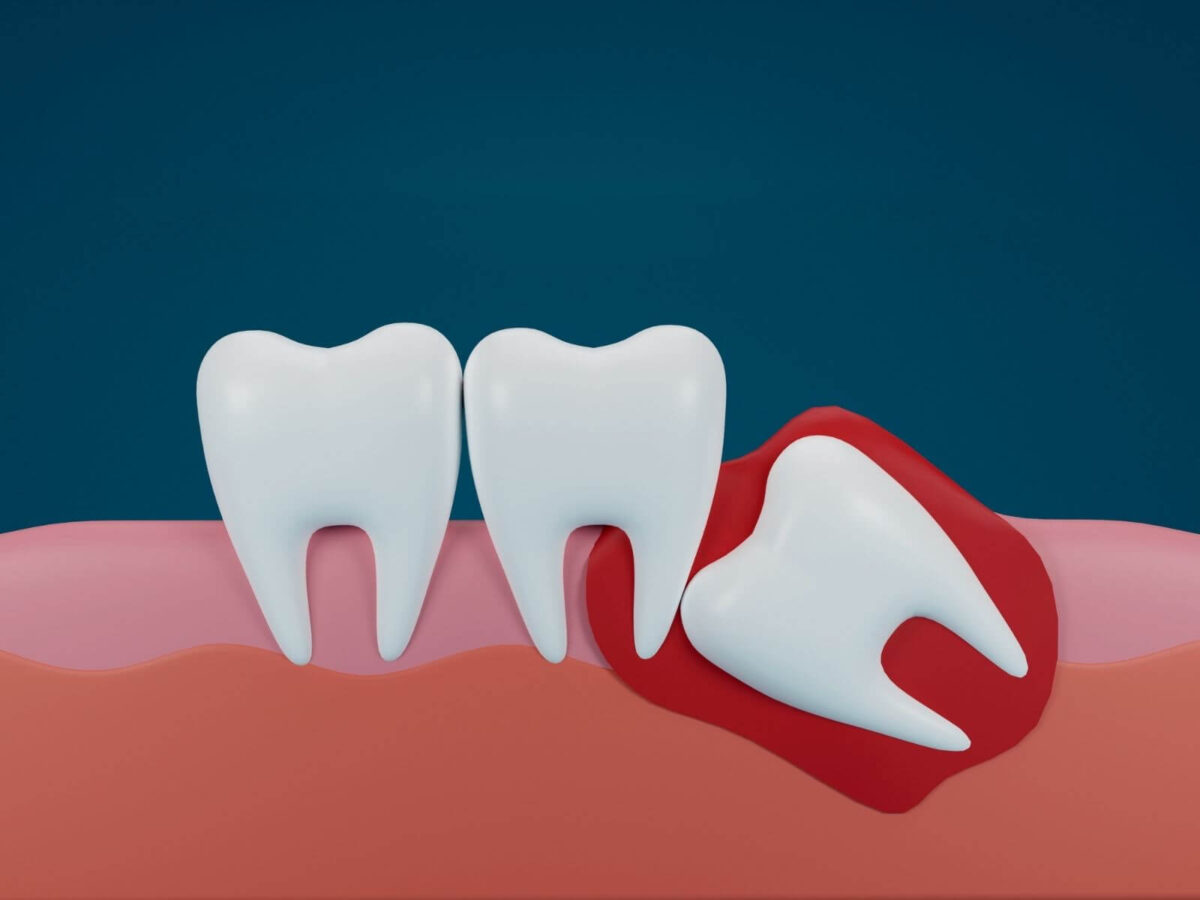
Sometimes, instead of erupting normally, the tooth gets blocked before it can fully come through. That’s when it’s called “impacted”. It might lean sideways into another tooth or stay buried beneath the gum tissue. In many cases, only the top edge becomes visible while the rest stays stuck below the surface.
That partial eruption creates problems fast because bacteria and food get trapped under the gum tissue very easily.
According to NIH-backed research, impacted third molars are among the most common developmental dental conditions in young adults. So while impacted wisdom teeth sound unusual, they’re actually extremely common.
Why Do Some Wisdom Teeth Become Impacted?
Mostly because there isn’t enough room. Human jaws simply don’t have the same amount of space they used to generations ago. By the time wisdom teeth try to erupt, usually in the early twenties, the mouth is often already crowded. That leaves the tooth with nowhere to go.
Sometimes it tilts sideways. Sometimes it stays trapped beneath the gums completely. Sometimes it pushes halfway through and stops there. And honestly, partially impacted teeth are often the most frustrating because symptoms keep coming and going instead of staying consistent.
What Symptoms Usually Happen With Erupted Wisdom Teeth?
This depends heavily on positioning. Not every wisdom tooth causes pain or swelling. In some cases, an erupted wisdom tooth stays completely quiet. It only gets noticed during a routine dental visit.
There can still be discomfort, although it is often not as serious as the issues caused by impacted teeth.
Common symptoms include:
- temporary gum tenderness
- mild pressure near the back molars
- slight irritation while chewing
- sensitivity as the tooth emerges
Usually, these settle once the tooth finishes erupting. Unless cleaning becomes difficult, that’s another issue entirely.
What Signs Usually Point to an Impacted Wisdom Tooth?
This is where things become more intense. The symptoms tied to impacted vs normal wisdom teeth are often very different because impacted teeth create pressure and trap bacteria more easily.
People commonly experience:
- swelling near the back gums
- jaw pain or stiffness
- difficulty chewing comfortably
- recurring infections
- headaches or ear pressure
- swollen lymph nodes in some cases
The pain sometimes reaches nearby molars, so people often mistake it for a cavity. Impacted wisdom teeth also tend to come and go. Things may feel better for some time before the discomfort suddenly returns again.
What Signs Mean an Impacted Wisdom Tooth Is Becoming Serious?
Not every impacted tooth becomes an emergency. But some absolutely can. Partially erupted wisdom teeth are especially vulnerable to infections called pericoronitis, where bacteria collect beneath the gum flap around the tooth.
According to oral surgery organizations, untreated infections can spread into nearby tissues if inflammation becomes severe enough. That’s usually when swelling starts spreading into the jaw or cheek. And once that happens, dentists stop viewing it as “just discomfort.”
How Do Dentists Tell the Difference?
X-rays become really important in impacted vs erupted wisdom tooth situations because the real problem is often hidden below the gums. A wisdom tooth can appear to be coming in fine at first glance. The problem sometimes becomes obvious only after an X-ray shows the tooth leaning into another molar or running out of room beneath the gums.
The early symptoms can be mild too. Some impacted wisdom teeth barely hurt at first, even when the tooth is stuck in a difficult position.
What Makes Impacted Wisdom Teeth Harder to Keep?
Mostly because impacted teeth tend to create more problems over time. A healthy erupted wisdom tooth can sometimes stay in place for years if it is easy to clean and does not cause damage nearby. Impacted teeth are different. They are more likely to lead to swelling, repeated infections, pressure, or irritation around the surrounding teeth and gums.
Research in dental journals has also connected impacted third molars with ongoing gum infections and surrounding tissue issues. Because of that, dentists end up recommending removal far more often in impacted cases.
Why Some Wisdom Teeth Only Need Monitoring
Dentists usually decide the treatment based on how the tooth is sitting and whether it is creating problems. A healthy erupted wisdom tooth may simply be monitored over time and cleaned like any other molar. Dentists simply keep an eye on it during routine visits. Impacted wisdom teeth are different.
Once infections or swelling start coming back again and again, removal is often the next step. Dentists may also treat the infection first if the area is too inflamed. And honestly, earlier treatment tends to be easier than waiting until pain becomes constant.
Why Do People Delay Wisdom Tooth Treatment So Much?
Mostly because symptoms fluctuate. The pain comes, then disappears. Swelling settles temporarily. Everything feels manageable again for a while, so people assume the problem has fixed itself. But impacted wisdom teeth often behave in cycles like that. And that temporary improvement is what causes delays more than anything else.
What Statistics Show About Wisdom Teeth?
- Most wisdom teeth begin coming in during the late teens or early twenties
- Impacted wisdom teeth are extremely common across adults worldwide
- Partially erupted teeth tend to carry a greater risk of swelling and infection
- Many adults deal with at least one impacted wisdom tooth over time
Put together, those numbers explain why so many wisdom teeth eventually need treatment.
What Questions Do People Usually Ask?
How is an impacted vs erupted wisdom tooth different?
An erupted tooth breaks through the gums normally. An impacted tooth cannot fully come through.
Are impacted wisdom teeth harder to manage?
They can be. Impacted teeth often lead to swelling. Infections and gum soreness can happen as well.
Do all erupted wisdom tooth cases require removal?
No. Some stay healthy for years without causing problems.
Are impacted wisdom teeth always removed?
No. But dentists recommend removal more often if symptoms keep returning.
Conclusion
With impacted vs erupted wisdom tooth cases, the symptoms can look completely different depending on how the tooth develops. A healthy erupted wisdom tooth may not need treatment beyond regular cleaning and monitoring. Impacted wisdom teeth are usually less predictable. The area may feel normal for weeks, then suddenly become swollen or painful again without much warning.
The pain or swelling might calm down temporarily. Even then, it is often worth getting the area looked at rather than ignoring it again. Problems linked to impacted vs normal wisdom teeth are often easier to deal with before the irritation gets worse. An X-ray can also show whether the tooth is pressing into nearby molars under the gums.