Blog
Dental hygiene tips for healthy teeth & gums
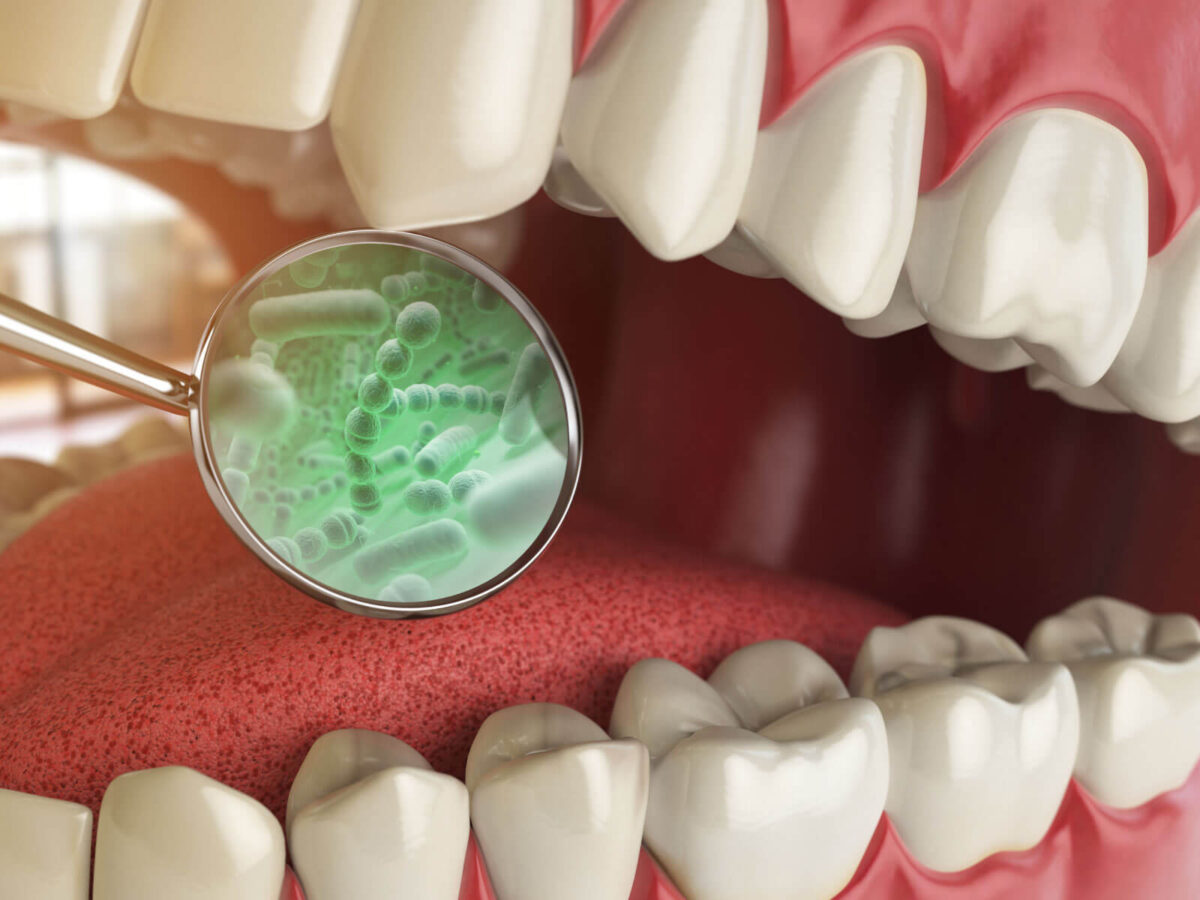
What Is the Oral Microbiome?: How It Impacts Your Teeth, Gums, and Systemic Health
A biology teacher I know tells her students their mouth has more neighbors than their apartment building, hundreds of species living there at any given moment, most of them doing something the mouth actually needs.
That’s the oral microbiome, and almost nobody thinks about it until something in their mouth starts going wrong.
What Really Is the Oral Microbiome
The oral microbiome is everything living in your mouth at once – bacteria, fungi, viruses, all of it, spread across teeth, gums, and tongue.
A database project out of the Forsyth Institute catalogued it down to roughly 600 named taxa spread across 13 phyla, and that’s likely an undercount.
Different surfaces host different populations. What’s thriving on a tooth isn’t necessarily what’s thriving on the tongue right next to it.
Push in the unnamed species, and some estimates top 700 total. A broader PMC review on oral microbiome health describes these microbes sharing the same small space mostly without conflict. Dysbiosis is the word for when that stops holding, and it’s usually where the oral microbiome stops working in someone’s favor.
How Does the Oral Microbiome Actually Develop, Starting From Infancy
The first exposure happens at birth. A literature review in PMC on the oral microbiome in children traces this to vertical transmission during delivery. Vaginally born infants pick up their mother’s vaginal and rectal microbes, while babies born by cesarean pick up skin and hospital environment microbes instead.
A longitudinal study in PMC following infant saliva microbiomes from two days to five years old found certain bacterial genera showing up in a predictable order, Streptococcus and Gemella arriving first, Actinomyces and Neisseria later around the one-year mark.
Tooth eruption itself acts as a turning point. A separate PMC study on preterm infant oral microbiota found the mouth’s bacterial community shifts drastically once teeth break through, since hard tooth surfaces give certain species somewhere to colonize that soft gum tissue never offered.
By around age two, most children’s oral microbiome settles into something closer to an adult pattern, though the research isn’t fully settled on exactly when that stabilization happens. A child’s early oral bacteria track loosely with their mother’s at first, then diverge as diet and environment take over.
What Throws the Oral Microbiome Out of Balance
Sugar and refined carbs are basically fuel for one species in particular, Streptococcus mutans. A diet heavy in either gives it the run of the place.
Saliva usually stops that from happening. It rinses bacteria off and takes the edge off the acid they produce, but smoking, alcohol, certain medications, and anything else that dries the mouth out all cut into that process.
A cavity is typically the first sign something’s off. Gum disease or bad breath showing up too usually means the imbalance has been building for a while already.
How Far Does Oral Bacteria Actually Travel Beyond the Mouth
A review in the Journal of Dental Research, hosted on PMC, maps out how oral bacteria leave the mouth in the first place. Inflamed gum tissue offers the most direct route. Bacteria there can slip straight into the bloodstream. Aspiration during sleep is a second, quieter one, tied to respiratory illness in patients already vulnerable to it. A biofilm coating can shield bacteria from stomach acid long enough for them to make it all the way to the gut intact.
A systematic review in PMC pulled together 104 studies out of more than a thousand screened, looking at oral dysbiosis and disease elsewhere in the body. Cardiovascular disease and pregnancy complications came up repeatedly, alongside autoimmune activity tied to molecular mimicry, where the immune system starts treating the body’s own tissue like a bacterial threat after enough prolonged exposure to oral microbiome pathogens.
What’s the Actual Connection Between the Mouth and the Gut
Closer than most people assume, and it runs in a specific direction. A PMC review on oral microbiome dysbiosis covers research on how oral bacteria transfer down into the gut, either swallowed directly in saliva or carried inside biofilm fragments that break off and travel the length of the digestive tract.
Once there, displaced oral bacteria don’t necessarily behave the way they did in the mouth. Some contribute to gut inflammation once they’ve relocated somewhere they don’t normally belong in large numbers. The same review ties this oral-gut transfer to a wider set of chronic conditions, cardiovascular disease and diabetes both showing up as associated outcomes, though the review is careful to frame this as an area still needing more direct clinical evidence rather than a settled mechanism.
The direction of travel is the part backed most consistently across studies of the oral microbiome. Bacteria moving from the mouth to the gut show up far more often in the research than the reverse trip.
Which Bacteria Actually Do the Most Damage
Cavities mostly trace back to one species – Streptococcus mutans, which converts sugar into the acid that wears down enamel.
Gum tissue destruction runs through different species almost entirely. A PMC review on periodontal pathogens and respiratory disease documents how Porphyromonas gingivalis can reach the lungs through saliva aspiration and the bloodstream, triggering inflammation once it gets there, in patients whose periodontal disease was left untreated long enough.
Fusobacterium nucleatum sits somewhere in between. It’s common in gum disease, but research has also traced identical strains from the same patient’s oral cavity to colorectal tumor tissue, suggesting some strains travel from the mouth into the gut and set up there.
That range, from gum disease to distant tumor tissue, says a lot about what one displaced species can do once conditions in the oral microbiome let it get out of hand.
Is There an Actual Mouth Bacteria Treatment That Works
Gingivitis responds well to one specific approach. A clinical review in PMC on probiotics in oral and periodontal health found that patients with moderate to severe gingivitis improved faster within two weeks when Lactobacillus reuteri was added alongside standard scaling and root planing, compared to scaling alone.
Cavity prevention is murkier. A separate PMC review on probiotics and prebiotics for dental caries points to a meta-analysis across 50 studies that came back without enough evidence to recommend probiotics for that purpose specifically, even though some individual strains did lower S. mutans counts in smaller trials.
One narrower success story comes from cancer care. Patients undergoing radiotherapy for head and neck cancer saw improved saliva flow and lower Fusobacterium nucleatum counts after 30 days on a specific probiotic combination, in a randomized trial published in PMC. That’s a real result, but a narrow one, and it doesn’t translate into a blanket mouth bacteria treatment recommendation for a healthy adult grabbing a probiotic off a shelf.
FAQ
Does mouthwash change the oral microbiome?
Some kinds do. Chlorhexidine wipes out bacteria broadly enough, good and bad both, that dentists usually limit it to short-term use.
Can a mouth be too clean?
No. Brushing and flossing don’t kill everything living in there. They just stop biofilm from maturing.
Do oral probiotics need bacteria that came from the mouth originally?
Usually not. Most come from dairy or the gut instead, and whether that matters is still being worked out.
Does stress affect oral bacterial balance?
Possibly, through changes in saliva and immune response, though there isn’t nearly as much direct research on it as there is on diet.
Conclusion
The oral microbiome stays invisible right up until diet, dry mouth, or a skipped dental visit knocks it out of balance. Cavities and gum disease are usually the first signs of that happening.
The basics haven’t changed. A dentist will still tell you to brush twice a day, floss, and go easy on sugar, the same advice as always.
What’s worth watching for is anything that doesn’t respond to that. Gum disease that keeps coming back no matter what you try, or a doctor connecting your teeth to something else going on in your body, is worth bringing straight to your dentist.