Blog
Dental hygiene tips for healthy teeth & gums
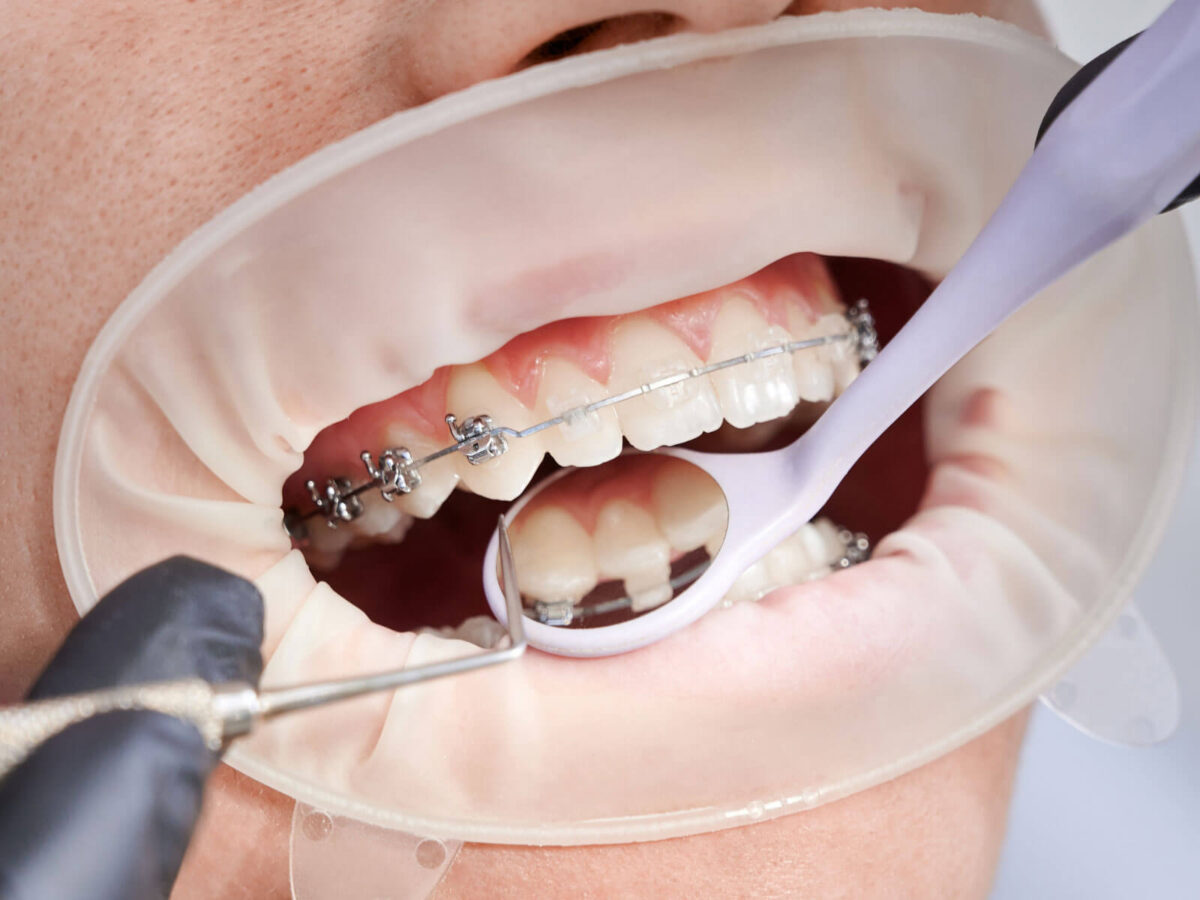
Ceramic Braces Pros and Cons Every Patient Should Weigh
“Clear or metal?” was the question, and I had no idea, so that night I was up late googling ceramic braces pros and cons on my phone. Clear brackets sounded like the easy middle ground between metal and aligners. It took a few months of wearing them to see what that middle ground really involves.
They’re harder to spot than metal, and they can handle tooth movements that aligners struggle with. They also cost more, pick up stains between visits, and need more care than I expected.
If you’re weighing them now, it helps to know both sides before the brackets go on.
TL;DR
- Ceramic braces sit between metal and aligners on visibility, cost, and maintenance demands.
- Most people across a table won’t notice them, though the brackets show from the side.
- Ceramic braces staining is a rubber band problem, not a bracket problem. Coffee, tea, and curry are the usual culprits between adjustment visits.
- The brackets can chip under sudden force, and hard or sticky foods are restricted for the full treatment.
- Plan on paying more for ceramic braces than metal. My practice charged about $1,000 extra, and my insurer covered it, but not all do.
- Ceramic braces vs Invisalign is less about preference and more about what the teeth actually need, and whether the patient will keep the trays in.
What Ceramic Braces Actually Are
My orthodontist handed me one of the brackets before she glued anything on. It was about the size of a grain of rice and almost the same shade as my teeth, which is really the whole point of ceramic braces. It’s made from a hard, glassy ceramic, and apart from the color, it does the same job a metal bracket does.
Getting them on took about an hour, most of it spent with my mouth propped open while she glued each bracket in place and hardened the glue under a little blue lamp. Once they were all set, she clipped a thin wire into them and wrapped each one with a clear elastic to keep the wire from slipping out. That wire had already been shaped like the smile I was supposed to end up with. Since my teeth didn’t match that shape yet, the wire kept tugging on them day and night until they slowly gave in.
My follow-up visits came around every six weeks, with a new rubber band on each bracket and, now and then, a firmer wire to keep the teeth moving. The soreness usually showed up that evening and faded by the weekend.
What Are the Pros Of Ceramic Braces
They’re hard to spot.
From across a table, most people didn’t notice mine at all. You can still see the brackets from the side, but they don’t flash under lights the way metal does. For me, working in client meetings, that made a big difference.
They handle tricky case.s
A couple of my bottom teeth were twisted pretty badly, and I’d half hoped aligners could sort them out. Research backs up what my orthodontist told me instead. A CBCT study of 60 patients on PubMed Central found fixed braces hit about 89% of the planned rotation on canines and premolars, while aligners reached around 79%. Ceramic brackets grip teeth the same way metal ones do, so I got that control without the shiny look.
They stay on
Cleveland Clinic notes that clear aligners need to be worn at least 22 hours a day, which I knew I’d never manage with my snacking habit. Braces are glued on, so they keep working whether I remember them or not.
They don’t add time
Going with ceramic didn’t stretch my treatment. My orthodontist said the bracket material doesn’t change how fast teeth move, so the timeline matches metal braces for the same case.
What Are the Cons Of Ceramic Braces
Staining
The brackets themselves held up fine for me, but the tiny clear rubber bands that hold the wire in place are a different story. Mine went yellow within two weeks of my first coffee. By my next appointment five weeks later, they were noticeably beige.
My orthodontist swapped them for metal ties at the second visit. The yellowing stopped, but I could feel the wire sitting a little firmer against my teeth. Some offices offer self-ligating brackets that skip the bands entirely, though not everywhere has them.
They can chip
I found out the hard way on day three when a bread roll took out one of my lower brackets. After that, I cut everything into small pieces. Anyone with a deep overbite should ask about this too, since the lower teeth can knock the upper brackets during biting.
Hygiene shows up more.
My hygienist took one look at my brackets at the first cleaning and handed me a sample water flosser. The gunk that builds up around ceramic shows every bit of it, whereas on metal you’d barely notice. She also mentioned white spots. Those are the faint chalky patches that show up on enamel when plaque sits too long against the tooth, and apparently they’re harder to hide on a cream-colored bracket than on a silver one.
Cost
I paid noticeably more for ceramic than I would have for metal. The American Dental Association puts average adult braces costs between $5,000 and $7,000, and ceramic braces typically cost about a thousand dollars higher than the metal price at the same practice.
My insurance covered ceramic at the same rate as metal, but not every plan does. Worth calling your insurer before you commit, because some treat the clear brackets as a cosmetic upgrade and leave the difference to you.
Weighing Your Options Before Committing?
The right appliance depends on your case complexity and daily life. Talk to our Benbrook team before you commit.
How Do Ceramic Braces vs Invisalign Compare
Two things usually decide this: how complex the tooth movements are, and whether the patient will realistically wear a removable appliance for 22 hours a day.
Invisalign suits mild crowding, small gaps, and minor spacing well. The trays are nearly invisible and come out for meals, which most patients prefer. For straightforward cases, the results are comparable to braces.
A PMC study of 60 patients found fixed braces reached about 89% of planned rotation compared to 79% for aligners. For cases involving significant twisting, bite correction, or teeth that need pulling down, ceramic braces vs. Invisalign tends to favor the brackets on clinical grounds.
Compliance is worth thinking about honestly. Aligners only work while they’re in, and a few hours off each day adds up fast. Brackets stay on regardless, which removes that variable entirely.
Price lands in a similar range for both, so that rarely settles the question on its own.
FAQ
Do ceramic braces stain?
The brackets themselves stay fairly clean, but the little elastic bands are a different story. Mine picked up color from coffee within two weeks. Metal ties or self-ligating brackets skip the bands entirely and solve the problem.
What does ceramic braces treatment actually cost?
I paid about $1,000 more for ceramic than I would have for metal at the same practice. Call your insurer before committing, because some plans cover ceramic at the same rate as metal and others treat it as a cosmetic upgrade you pay for yourself.
Are ceramic braces vs Invisalign a clear choice?
It depends on the case. For significant rotation or bite correction, brackets hold teeth more precisely. For mild crowding in a patient who’ll wear the trays consistently, aligners are often the better fit.
How long does treatment take?
About the same as metal braces for the same case. My orthodontist said the bracket material doesn’t change how fast teeth move, so the timeline comes down to case complexity.
Conclusion
Nobody hands you a list of what ceramic braces pros and cons are actually like day to day, and I wish someone had. The staining surprised me. I broke a bracket in week one, and I underestimated how long I’d be cutting my food into small pieces.
What I got in return was a treatment that moved the teeth my case needed moved, without a mouth full of metal in client meetings. For anyone whose case is too complex for aligners but who doesn’t want to go full metal, ceramic sits in a genuinely useful spot.
If you’re in Benbrook and still weighing ceramic braces vs Invisalign, the best thing to do is book an assessment. The right answer depends on your specific teeth, not on what worked for someone else.
Find Out Which Appliance Fits Your Case
Get a proper assessment in Benbrook before committing to brackets or trays.